1. Write down the complete event schedule
Begin with the first person on site and finish with the last cleanup worker. The public invitation might describe a four-hour event, while the venue is occupied for much longer by setup staff, caterers, entertainers, and volunteers. Give the rental coordinator both the guest schedule and the working schedule. Include any rehearsal or previous-day setup that also needs restroom access.
Describe when attendance builds and when people take breaks. A seated ceremony, a tournament with games ending together, and a continuous open house create different patterns. Record your best expected attendance and explain how certain that number is. If tickets or registrations are still changing, agree on a point when the equipment plan should be reviewed.
2. Check the facilities already included
Ask the venue which permanent restrooms are available to your group, where they are, and when they open and close. Confirm whether another event shares them. Nearby public restrooms should not automatically be counted as event capacity; access, operating hours, and the route from your gathering all matter. Get the venue's answer before deciding what supplemental equipment is needed.
Also identify who authorizes temporary equipment. A venue reservation may not settle placement on adjoining public land, a shared parking area, or an association-managed lawn. Ask for the approved location and vendor route in writing or on a marked site plan. The rental coordinator needs those details to assess feasibility.
3. Choose equipment using the site and guest needs
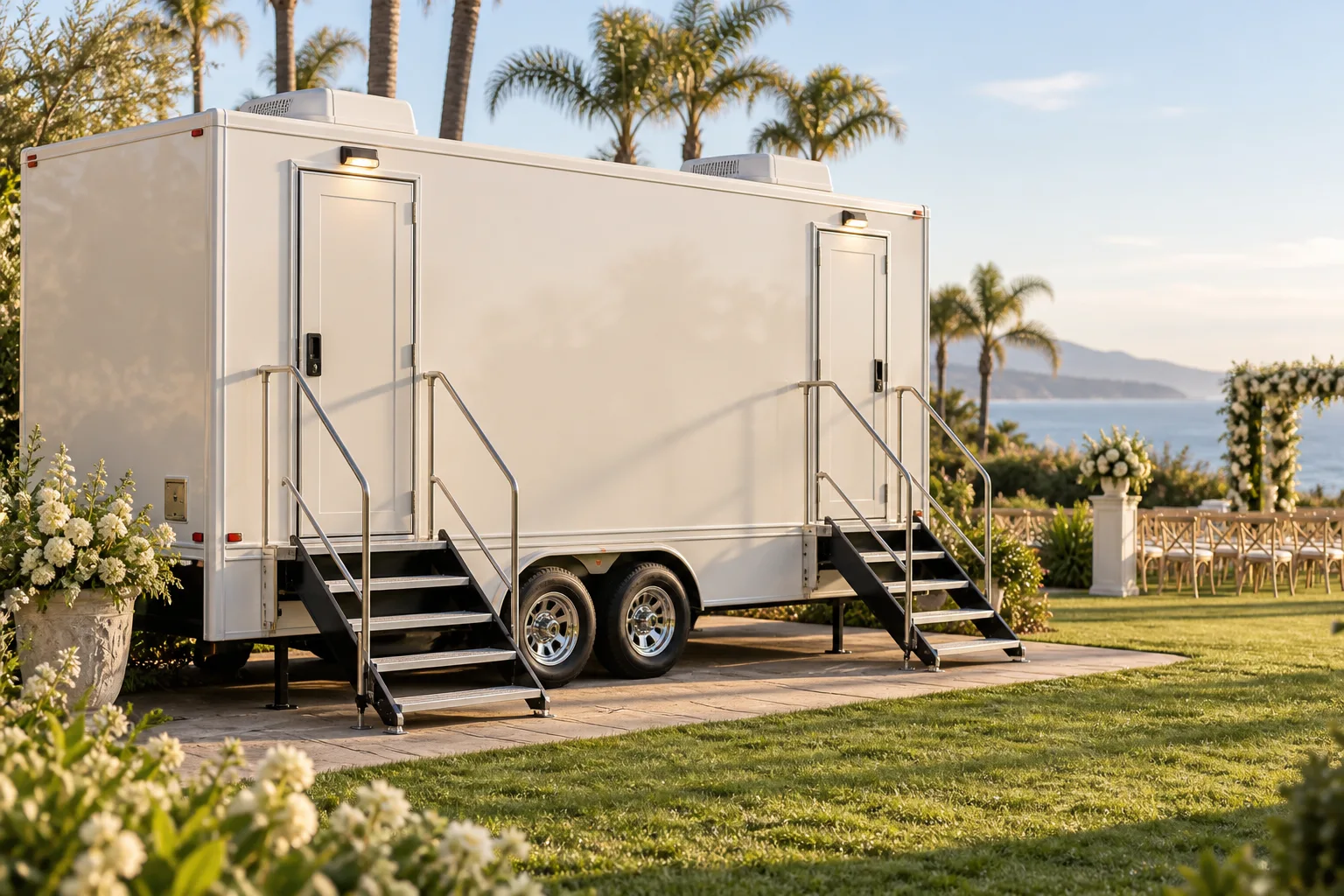
Discuss standard units, accessible options, handwashing, and restroom trailers according to the event's needs. A trailer may support the atmosphere you want, but its footprint and utilities must fit the property. Ask for the details of the specific model being offered, including its entry arrangement. Do not assume that every trailer has the same power, water, or access requirements.
Include accessibility early. Review how people travel from parking or drop-off to the event and then to the facilities. The unit's features are one part of that experience. Surface conditions, level changes, door space, signs, and any required entry equipment need to work together. Have the venue's responsible representative review applicable requirements for the full setup.
4. Place restrooms on the same map as everything else
Draw the activity areas, food service, guest entrances, restrooms, handwashing, and vendor loading points on one plan. Leave space for doors and queues. Avoid sending guests across a loading route or placing a restroom line beside a narrow exit. When the event occupies several areas, examine whether facilities remain practical to reach from each one.
Walk the route after tables, signs, and temporary barriers are considered. A clear path on an empty property can become awkward once the event is installed. Privacy screening should not hide signs or restrict service access. Ask the rental coordinator before attaching anything to rented equipment or building screening immediately around it.
5. Decide who handles checks and supplies
Ask what the rental service includes: pumping, cleaning, restocking, handwashing supplies, and any scheduled visit during a longer event. Separate those tasks from the organizer's routine checks. Someone on site should know how to report a blocked door, low supplies, or a problem with the guest route. Do not assume another vendor will take responsibility.
Place handwashing where it is easy to use after the restroom. CDC guidance recommends washing with soap and water after using the toilet. Ask about the water and supply capacity of the proposed station and how replenishment works. Food vendors may have separate handwashing needs, which should be coordinated with the venue and the people responsible for their operations.
6. Confirm delivery and collection before the event
Give the coordinator access photographs, gate instructions, an on-site contact, and the approved arrival window. Schedule delivery so it does not compete with large catering or staging vehicles. For multi-day use, preserve the service route after the event opens. Collection also needs a clear path and someone authorized to provide access after guests and vendors leave.
Request a written quote that identifies equipment, dates, included service, delivery, collection, and the process for changes. For a Laguna Niguel-area event, contact Laguna Niguel Porta Potty Rentals at (949) 844-2660 to confirm address-specific coverage and availability. Share the venue plan before treating the order as booked, then circulate the agreed restroom layout with the final vendor instructions.
Turn your checklist into a rental plan
Explore our eight portable restroom services, check the guide for your community, or call (949) 844-2660 to discuss your site and dates. Equipment, timing, and pricing are confirmed for each request.